














Radiation Oncology at Massachusetts General Hospital
Radiation Oncology at Massachusetts General Hospital provides specialized cancer treatment using high-precision radiation therapy to target cancer cells while helping protect surrounding healthy tissues. Radiation may be used as a primary treatment or combined with surgery, chemotherapy, immunotherapy or other cancer therapies.
Price
Price on Request
Why Price on Request?
The cost depends on the cancer type and location, radiation technique, number of treatment sessions, imaging, treatment planning and follow-up care required. A personalized estimate is provided according to the treatment plan.
Complete Description
What Is Radiation Oncology?
Radiation Oncology is a specialized field of cancer care that uses radiation to destroy or control cancer cells.
Radiation therapy may be used to:
Treat cancer
Shrink tumors
Prevent cancer recurrence
Control advanced cancer
Relieve cancer-related symptoms
Who May Need Radiation Oncology?
Radiation therapy may be considered for selected patients with:
Localized cancer
Locally advanced cancer
Recurrent cancer
Certain metastatic cancers
Tumors that cannot be completely removed surgically
Cancer requiring symptom relief
Radiation Oncology Consultation
The radiation oncologist may review:
Cancer diagnosis
Pathology
Imaging
Cancer stage
Previous treatments
Overall health
Treatment goals
Radiation Treatment Planning
Before treatment begins, specialists carefully plan:
Radiation dose
Treatment area
Number of sessions
Patient positioning
Protection of nearby healthy tissues
Advanced imaging may be used to guide treatment planning.
External Beam Radiation Therapy
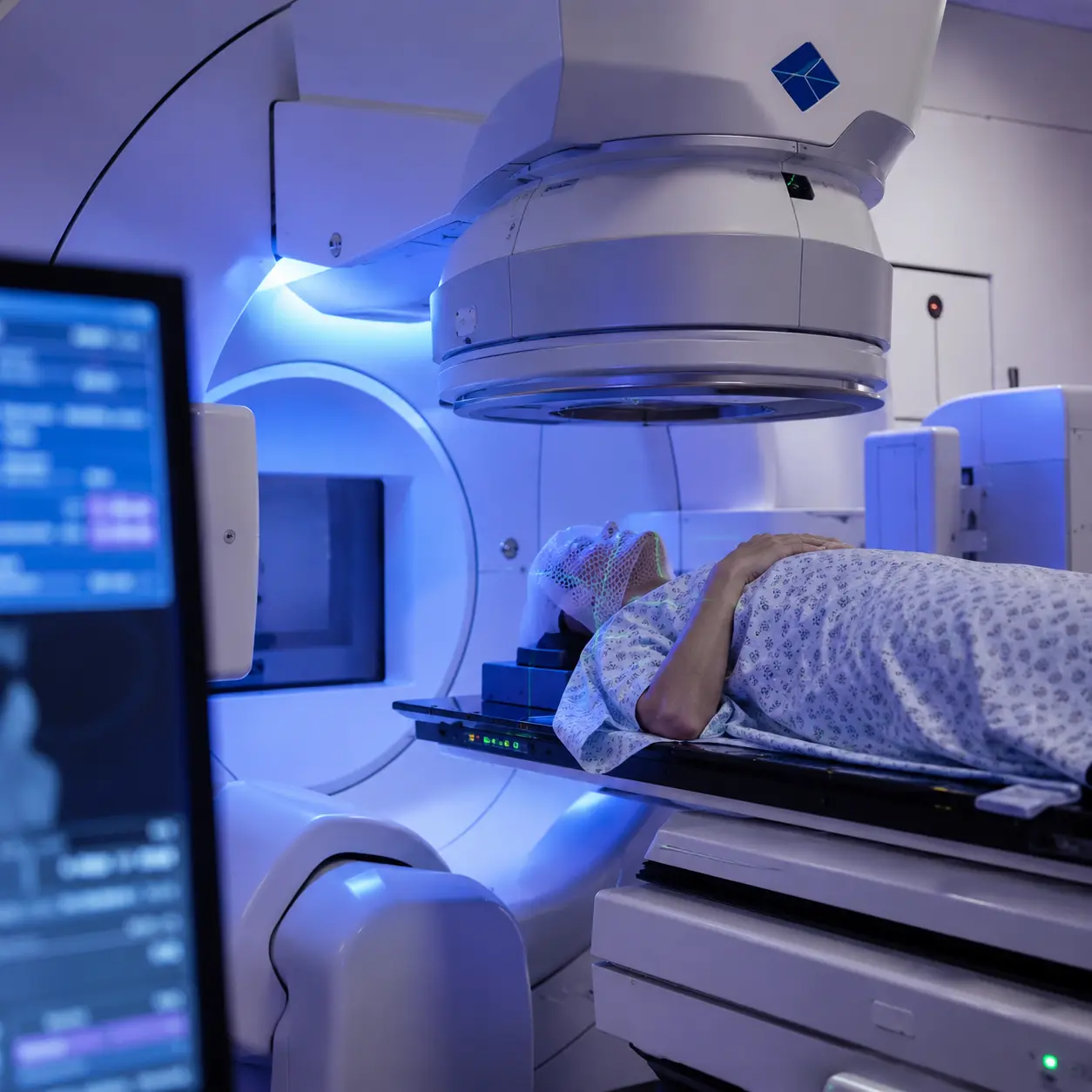
External beam radiation delivers radiation from a specialized machine directed toward the tumor.
Treatment may be delivered over multiple sessions depending on the cancer and treatment plan.
Intensity-Modulated Radiation Therapy
IMRT uses advanced planning techniques to shape radiation doses around the tumor while helping reduce exposure to nearby healthy tissues.
Image-Guided Radiation Therapy
IGRT uses imaging during treatment to help accurately position the patient and treatment area.
It may be useful when tumors move or are located close to sensitive structures.
Stereotactic Radiation Therapy
Selected patients may receive highly focused radiation in a limited number of treatment sessions.
Stereotactic techniques may be considered for certain tumors depending on their:
Size
Location
Number
Clinical characteristics
Stereotactic Radiosurgery
Despite the term "surgery," stereotactic radiosurgery is a non-surgical radiation treatment that delivers highly focused radiation to selected tumors or abnormal areas.
Brachytherapy
Brachytherapy places a radiation source inside or close to the treatment area.
It may be appropriate for selected cancer types.
Radiation Combined With Surgery
Radiation therapy may be used:
Before surgery
After surgery
Around the time of surgery
The sequence depends on the cancer type and treatment strategy.
Radiation Combined With Chemotherapy
Some patients receive chemotherapy together with radiation to improve cancer treatment effectiveness.
This approach is used for selected cancers.
Radiation for Advanced Cancer
Radiation may also be used to control symptoms caused by advanced cancer, including selected cases involving:
Bone metastases
Brain metastases
Painful tumors
Other symptomatic tumors
Advanced Radiation Technology
Radiation oncology may use advanced technologies designed to improve treatment precision and delivery.
Treatment selection depends on:
Tumor characteristics
Location
Cancer stage
Patient anatomy
Previous radiation
Radiation Treatment Monitoring
During treatment, the radiation oncology team may monitor:
Treatment response
Side effects
General health
Treatment tolerance
Imaging findings when appropriate
Potential Radiation Therapy Side Effects
Side effects vary according to the treatment area and dose.
Possible effects may include:
Fatigue
Skin changes
Local irritation
Swelling
Treatment-specific organ effects
The radiation oncology team provides guidance for managing side effects.
Follow-Up After Radiation Therapy
Follow-up may include:
Clinical examinations
Imaging
Laboratory testing when appropriate
Monitoring for recurrence
Management of late treatment effects
Radiation Oncology Second Opinion
Patients may seek a radiation oncology second opinion regarding:
Recommended radiation treatment
Treatment technique
Radiation dose
Number of sessions
Combination with other cancer treatments
International Patients
International patients should provide relevant cancer records whenever possible.
Useful documents may include:
Pathology reports
Biopsy results
CT/MRI/PET scans
Previous radiation records
Chemotherapy records
Surgical reports
Laboratory results
Medication list
Benefits of Specialized Radiation Oncology
Specialized radiation care may help:
Precisely target tumors
Treat localized cancer
Reduce tumor size
Control recurrent disease
Manage selected metastatic tumors
Relieve cancer-related symptoms
Coordinate radiation with surgery and systemic therapy
Why Choose Massachusetts General Hospital for Radiation Oncology?
Massachusetts General Hospital provides specialized radiation oncology through Mass General Cancer Center, with access to advanced radiation technologies and multidisciplinary cancer care.
Cost & Price on Request
Price: Price on Request
Potential costs may include:
Radiation oncology consultation
Imaging
Radiation treatment planning
Treatment sessions
Specialized radiation technology
Laboratory testing
Follow-up care
A personalized cost estimate should be requested according to the patient's treatment plan.
Frequently Asked Questions
1. What does radiation oncology treat?
Radiation oncology uses radiation therapy to treat, control or relieve symptoms from selected cancers.
2. Is radiation therapy painful?
The radiation delivery itself is generally not felt, although some patients may develop side effects depending on the treatment area.
3. How many radiation sessions are needed?
The number varies depending on the cancer type, location, treatment goal and radiation technique.
4. Can radiation be combined with chemotherapy or surgery?
Yes. Radiation may be combined with surgery, chemotherapy, immunotherapy or other cancer treatments when clinically appropriate.
5. How much does radiation oncology treatment cost?
Price is available on request. The final cost depends on treatment planning, radiation technique, number of sessions, imaging and follow-up care.
Product Details
Product Name: Radiation Oncology at Massachusetts General Hospital
Hospital: Massachusetts General Hospital
Brand: Massachusetts General Hospital
Country: United States
Specialty: Oncology & Cancer Care
Service Type: Radiation Oncology
Customer-Facing Price: Price on Request
International Patients: Available
Location: Boston, Massachusetts, USA
Related products





Frequently Bought Together
No frequently bought products found!
Products from this Seller
View All







Chemotherapy at Mayo Clinic

Immunotherapy at Mayo Clinic



Medical Tourism





Share with Friends
Trading is more effective when you share products with friends!Share you link
Share to