














Bone Marrow Transplant at Massachusetts General Hospital
Short Description
Bone Marrow Transplant at Massachusetts General Hospital provides specialized hematopoietic stem cell transplantation for selected patients with blood cancers, bone marrow disorders and certain blood or immune-system conditions. Treatment may involve stem cell collection, conditioning therapy, transplantation and close monitoring by a multidisciplinary transplant team.
Price
Price on Request
Why Price on Request?
The cost depends on the transplant type, patient's diagnosis, donor requirements, stem cell collection, conditioning treatment, hospitalization, medications and follow-up care. A personalized estimate is provided after clinical evaluation.
Complete Description
What Is a Bone Marrow Transplant?
A bone marrow transplant, also called a hematopoietic stem cell transplant (HSCT), replaces damaged or diseased blood-forming stem cells with healthy stem cells.
It may be considered for selected patients with serious blood and bone marrow disorders.
Who May Need a Bone Marrow Transplant?
Transplantation may be considered for selected patients with:
Leukemia
Lymphoma
Multiple myeloma
Certain bone marrow disorders
Other hematologic malignancies
Selected immune or inherited disorders
Eligibility depends on the specific diagnosis and individual health factors.
Transplant Consultation
The transplant team may review:
Cancer or blood disorder diagnosis
Disease stage and status
Previous treatments
Laboratory results
Imaging
Organ function
Overall health
Types of Bone Marrow Transplant
Major transplant approaches include:
Autologous Transplant
Uses the patient's own previously collected stem cells.
Allogeneic Transplant
Uses stem cells obtained from a donor.
The appropriate approach depends on the patient's disease and treatment plan.
Stem Cell Collection
Stem cells may be collected from the patient's blood or, in certain situations, from bone marrow.
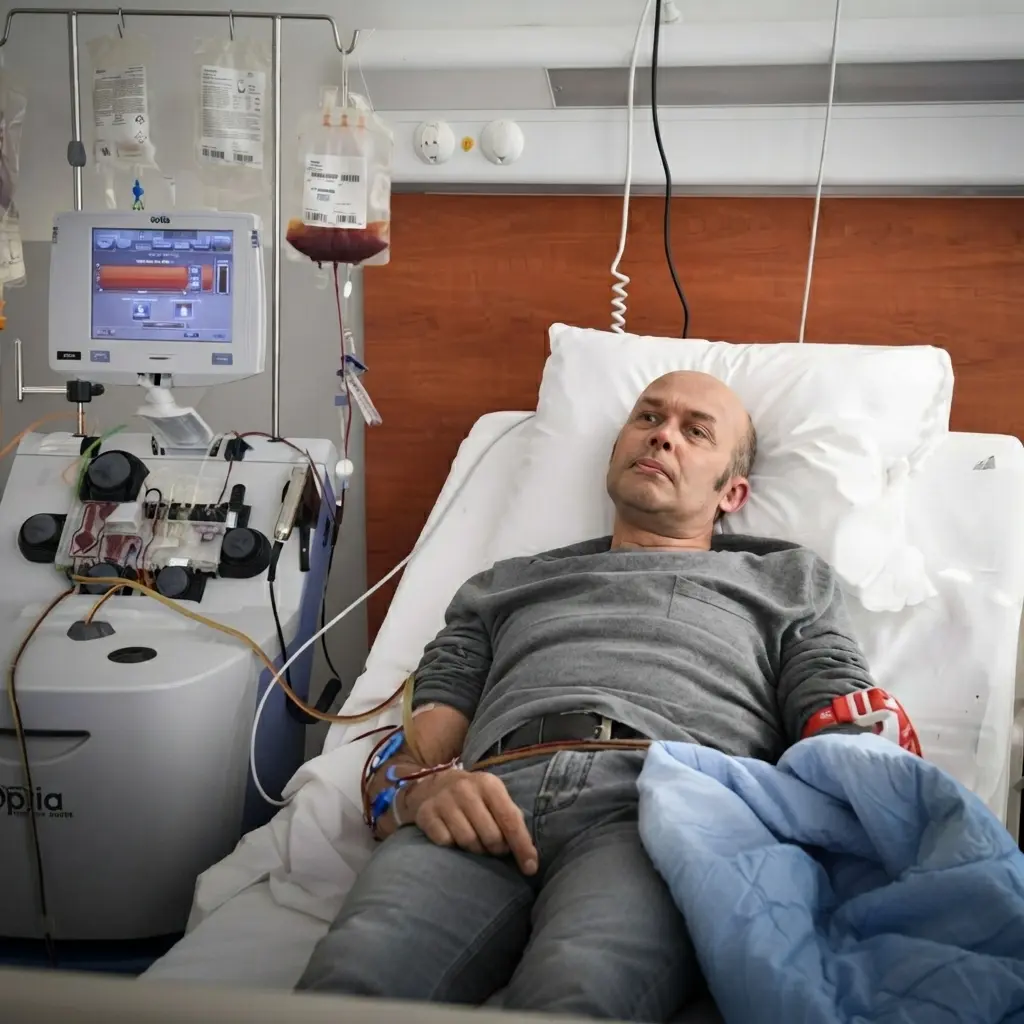
For peripheral blood stem cell collection, a specialized procedure called apheresis may be used.
Donor Evaluation
For an allogeneic transplant, potential donors may undergo testing to determine compatibility.
Evaluation may include:
HLA typing
Medical assessment
Laboratory testing
Infectious-disease screening
Conditioning Therapy
Before transplantation, patients generally receive conditioning treatment.
This may involve:
Chemotherapy
Radiation therapy
Combination treatment
The goal is to prepare the body for the transplant and treat the underlying disease.
Stem Cell Infusion
After conditioning, stem cells are administered through an intravenous infusion.
The transplanted cells can then travel to the bone marrow and begin producing new blood cells.
Engraftment
Engraftment occurs when transplanted stem cells establish themselves in the bone marrow and begin producing blood cells.
The transplant team monitors blood counts and other laboratory results during this period.
Post-Transplant Monitoring
Patients require close monitoring after transplantation.
Care may include:
Blood-count monitoring
Infection monitoring
Medication management
Organ-function testing
Transplant response assessment
Management of complications
Graft-Versus-Host Disease
Patients receiving an allogeneic transplant may develop graft-versus-host disease (GVHD), in which donor immune cells react against the recipient's tissues.
The transplant team monitors for GVHD and provides appropriate management when necessary.
Infection Prevention and Monitoring
After transplantation, the immune system can be weakened.
Patients may require:
Infection monitoring
Preventive medications
Vaccination planning
Specialized follow-up
Blood Transfusion Support
Some patients may require blood or platelet transfusions during the transplant process, depending on blood counts and clinical needs.
Long-Term Follow-Up
Post-transplant follow-up may monitor:
Blood counts
Disease status
Immune recovery
Organ function
Medication effects
Long-term complications
Bone Marrow Transplant for Blood Cancers
Transplantation may be used in selected patients with cancers such as:
Leukemia
Lymphoma
Multiple myeloma
The role of transplantation depends on the disease, treatment response and individual circumstances.
Multidisciplinary Transplant Care
Care may involve:
Hematologists
Medical oncologists
Transplant physicians
Cellular therapy specialists
Infectious-disease specialists
Specialized nurses
Other supporting specialists
Clinical Trials
Eligible patients may have access to clinical trials involving:
New conditioning approaches
Transplant strategies
Cellular therapies
Post-transplant treatments
New approaches to reduce complications
Bone Marrow Transplant Second Opinion
Patients may seek a bone marrow transplant second opinion regarding:
Transplant eligibility
Autologous versus allogeneic transplant
Donor options
Conditioning treatment
Alternative therapies
Clinical trials
International Patients
International patients should provide comprehensive medical records whenever possible.
Useful documents may include:
Pathology reports
Bone marrow biopsy reports
Blood-test results
Imaging reports
Previous chemotherapy records
Previous transplant evaluations
HLA testing when available
Medication list
Benefits of Specialized Transplant Care
Specialized transplant programs may provide:
Detailed transplant eligibility assessment
Donor evaluation
Stem cell collection
Conditioning treatment
Transplant administration
Close post-transplant monitoring
Management of transplant complications
Long-term follow-up
Why Choose Massachusetts General Hospital for Bone Marrow Transplant?
Massachusetts General Hospital provides specialized hematology, oncology and stem cell transplantation services through its multidisciplinary cancer programs, supporting patients through evaluation, transplantation and long-term follow-up.
Cost & Price on Request
Price: Price on Request
Potential costs may include:
Transplant consultation
Diagnostic testing
Stem cell collection
Donor evaluation
Conditioning treatment
Stem cell infusion
Hospitalization
Medications
Blood-product support
Post-transplant monitoring
Follow-up care
A personalized cost estimate should be requested according to the patient's transplant plan.
Frequently Asked Questions
1. What is a bone marrow transplant?
It is a treatment that replaces damaged or diseased blood-forming stem cells with healthy stem cells.
2. What is the difference between autologous and allogeneic transplant?
An autologous transplant uses the patient's own stem cells, while an allogeneic transplant uses stem cells from a donor.
3. What diseases can require a bone marrow transplant?
Transplantation may be used for selected leukemias, lymphomas, multiple myeloma and other serious blood or bone marrow disorders.
4. How long does recovery take?
Recovery varies significantly depending on the transplant type, underlying disease, complications and overall health. Long-term follow-up is often required.
5. How much does a bone marrow transplant cost?
Price is available on request. Costs depend on transplant type, stem cell collection, conditioning, hospitalization, medications and follow-up care.
Product Details
Product Name: Bone Marrow Transplant at Massachusetts General Hospital
Hospital: Massachusetts General Hospital
Brand: Massachusetts General Hospital
Country: United States
Specialty: Oncology & Cancer Care
Service Type: Bone Marrow Transplant
Customer-Facing Price: Price on Request
International Patients: Available
Location: Boston, Massachusetts, USA
Related products






Frequently Bought Together
No frequently bought products found!
Products from this Seller
View All









Chemotherapy at Mayo Clinic

Immunotherapy at Mayo Clinic




Medical Tourism





Share with Friends
Trading is more effective when you share products with friends!Share you link
Share to