













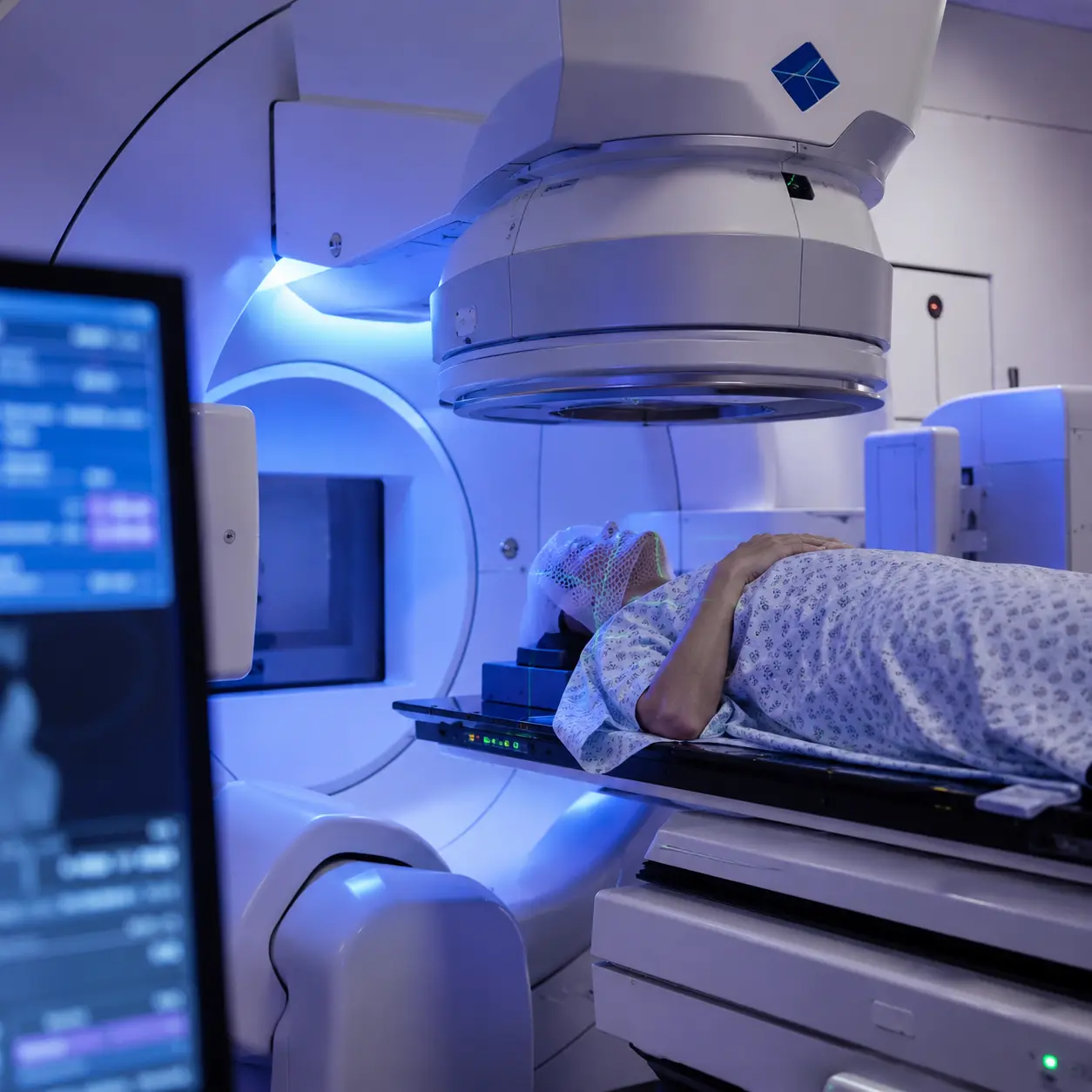
Proton Beam Therapy at Mayo Clinic
Proton Beam Therapy is an advanced form of radiation treatment that uses protons rather than conventional X-rays to deliver radiation to selected tumors. It may be considered for certain cancers where precise radiation delivery is clinically appropriate.
Price: Price on Request
Why Price on Request?
The cost of proton beam therapy depends on the type and location of cancer, treatment plan, number of sessions, imaging, treatment planning, facility requirements and the patient's individual condition. A personalized cost estimate is therefore required.
Full Description
Proton Beam Therapy at Mayo Clinic
Proton Beam Therapy is a specialized radiation treatment that uses accelerated protons to deliver radiation to a targeted area.
Unlike conventional photon radiation, proton therapy has physical properties that can allow the radiation dose to be concentrated more closely around the intended treatment area in selected situations.
The goal is to treat the tumor while potentially reducing unnecessary radiation exposure to nearby healthy tissues.
Whether proton therapy is appropriate depends on the cancer type, tumor location, size, stage and relationship to surrounding organs.
What Is Proton Beam Therapy?
Proton beam therapy is a form of external-beam radiation therapy.
Instead of using photons, the treatment uses protons, which are charged particles accelerated to high energies.
The physical characteristics of protons allow specialists to plan where much of the radiation dose is deposited.
This can be particularly relevant when a tumor is located close to sensitive or critical structures.
How Proton Beam Therapy Works
During proton therapy, protons are accelerated and directed toward the treatment area.
The treatment is carefully planned so that the radiation reaches the intended tumor while limiting radiation exposure to surrounding tissues where possible.
Advanced imaging and computer-based treatment planning are used to determine the appropriate treatment angles and dose distribution.
Proton Therapy vs Conventional Radiation
Both proton therapy and conventional radiation therapy can be used to treat cancer.
The main difference is the type of radiation used.
Conventional radiation therapy generally uses high-energy X-rays, while proton therapy uses accelerated protons.
Proton therapy may have dosimetric advantages in selected cases, but it is not automatically better for every cancer or every patient.
The radiation oncology team determines which approach is most appropriate.
Who May Be Considered for Proton Therapy?
Proton therapy may be considered for selected patients when reducing radiation exposure to nearby healthy tissues could be clinically valuable.
Factors considered may include:
Tumor location
Tumor size
Cancer type
Cancer stage
Patient age
Previous radiation treatment
Nearby critical organs
Previous treatments
Overall treatment goals
A specialist evaluation is required to determine suitability.
Cancers That May Be Treated With Proton Therapy
Depending on the clinical situation, proton therapy may be considered for selected:
Brain tumors
Head and neck cancers
Spinal tumors
Pediatric cancers
Lung cancers
Prostate cancer
Breast cancer
Liver tumors
Esophageal cancers
Other tumors located near sensitive structures
Not every patient with these cancers will require or benefit from proton therapy.
Proton Therapy for Brain Tumors
For selected brain tumors, proton therapy may help limit radiation exposure to surrounding healthy brain tissue.
Treatment planning takes into account:
Tumor location
Tumor size
Nearby critical structures
Previous treatments
Patient age
Overall treatment objectives
Proton Therapy for Head and Neck Cancers
The head and neck contain many sensitive structures that can be affected by radiation.
For selected tumors in this region, proton therapy may help reduce radiation exposure to nearby tissues.
Treatment planning may consider structures such as:
Salivary glands
Spinal cord
Brain structures
Eyes
Other critical tissues
Proton Therapy for Pediatric Cancer
Children can be particularly sensitive to radiation exposure because they are still developing.
For selected pediatric cancers, proton therapy may be considered when limiting radiation exposure to healthy developing tissues is an important treatment goal.
The decision is made based on the individual child's diagnosis and treatment requirements.
Proton Therapy for Spinal Tumors
For selected spinal tumors, precise radiation delivery may be important because the tumor can be located close to the spinal cord and other critical structures.
Proton therapy may be considered when its radiation-dose characteristics provide a potential clinical advantage.
Proton Therapy for Lung Cancer
Selected patients with lung tumors may be evaluated for proton therapy.
Treatment planning may consider the location of the tumor and the amount of radiation that could reach surrounding structures such as:
Healthy lung tissue
Heart
Esophagus
Other nearby organs
Proton Therapy for Prostate Cancer
Proton therapy may be considered for selected prostate cancer patients.
Treatment planning focuses on delivering radiation to the prostate while managing radiation exposure to nearby structures such as the:
Bladder
Rectum
Surrounding tissues
The most appropriate radiation technique depends on the individual patient.
Treatment Planning
Before proton therapy begins, specialists perform detailed treatment planning.
This may include:
Medical history review
Physical examination
CT simulation
MRI or PET imaging when appropriate
Tumor localization
Treatment-area mapping
Radiation-dose calculations
Computerized treatment planning
Evaluation of nearby organs
The goal is to develop a precise and individualized radiation treatment plan.
CT Simulation
A CT simulation is commonly used to map the treatment area.
The patient is positioned carefully so that the same position can be reproduced during treatment sessions.
The imaging data helps the radiation oncology team determine:
Tumor location
Treatment area
Radiation dose
Treatment angles
Nearby sensitive structures
Proton Therapy Treatment Sessions
Proton therapy is generally delivered in a series of treatment sessions, although the number varies according to the cancer and treatment plan.
Treatment schedules may range from a small number of sessions to a longer course of radiation treatment.
The radiation oncology team determines the appropriate schedule.
During Proton Therapy
During treatment, the patient is positioned carefully on the treatment table.
The treatment team uses specialized equipment and imaging or positioning techniques to ensure that the patient is correctly aligned.
The actual radiation delivery is generally brief, although the complete appointment may take longer because of positioning and verification.
Potential Benefits of Proton Therapy
For selected patients, proton therapy may offer:
Precise radiation delivery
Potential reduction in radiation exposure to nearby healthy tissues
Useful treatment options for tumors close to critical structures
Potential advantages for selected pediatric cancers
Potential benefits for selected patients requiring re-irradiation
The benefits depend on the individual treatment plan and tumor location.
Important Consideration
Proton therapy is not necessarily the best radiation treatment for every patient.
Modern photon-based techniques can also provide highly precise radiation treatment.
A radiation oncologist may compare different treatment approaches and determine which technique provides the most appropriate balance between tumor control and protection of healthy tissues.
Potential Side Effects
Proton therapy can still cause side effects because it is a form of radiation treatment.
Possible side effects depend on the treatment area and may include:
Fatigue
Skin irritation
Redness
Hair loss in the treated area
Nausea
Appetite changes
Local swelling
Treatment-area discomfort
Location-specific effects
Side effects vary between patients.
Proton Therapy After Previous Radiation
Some patients who have previously received radiation may be evaluated for additional radiation treatment.
In selected situations, proton therapy may help specialists reduce radiation exposure to previously treated healthy tissues.
However, re-irradiation requires careful specialist assessment because previous radiation dose and treatment area must be considered.
Multidisciplinary Proton Therapy Care
Proton therapy may involve collaboration between:
Radiation oncologists
Medical physicists
Dosimetrists
Radiation therapists
Medical oncologists
Surgical oncologists
Radiologists
Other cancer specialists
This coordinated approach supports accurate treatment planning and delivery.
International Patients
International patients seeking proton therapy may need to provide complete medical records for specialist review.
Useful documents may include:
Pathology reports
Biopsy reports
CT scans
MRI scans
PET scans
Previous radiation treatment plans
Radiation dose records
Surgical reports
Chemotherapy records
Current medication list
Previous radiation information is particularly important when considering additional radiation treatment.
Benefits for International Patients
International patients may receive coordinated evaluation to determine whether proton therapy is appropriate for their specific cancer.
The evaluation may help clarify:
Diagnosis
Cancer stage
Treatment options
Radiation technique
Expected treatment duration
Required medical services
Estimated treatment costs
Cost & Price on Request
Price: Price on Request
Proton beam therapy requires specialized equipment and detailed treatment planning, so costs can vary considerably.
The total cost may depend on:
Radiation oncology consultation
Imaging
CT simulation
Treatment planning
Proton therapy sessions
Number of treatment sessions
Medical physics services
Radiation therapy delivery
Follow-up consultations
Supportive care
Other medically necessary services
A personalized cost estimate should be requested after specialist evaluation.
Frequently Asked Questions
1. What is proton beam therapy?
Proton beam therapy is an advanced form of radiation therapy that uses accelerated protons to deliver radiation to selected tumors.
2. Is proton therapy better than conventional radiation therapy?
Not necessarily. Proton therapy may provide advantages in selected cases, but modern conventional radiation techniques can also be highly precise. The best option depends on the patient's cancer type, location and treatment plan.
3. Which cancers can be treated with proton therapy?
Proton therapy may be considered for selected brain, head and neck, spinal, pediatric, lung, prostate, breast, liver and other cancers depending on the individual case.
4. Does proton therapy have side effects?
Yes. Proton therapy can cause side effects, although the type and severity depend on the treatment area, radiation dose and individual patient.
5. How much does proton beam therapy cost?
Price is available on request. The total cost depends on treatment planning, number of sessions, imaging, radiation delivery and other required medical services.
Product Details
Product Name: Proton Beam Therapy
Hospital: Mayo Clinic – Rochester
Brand: Mayo Clinic
Country: United States
Specialty: Oncology & Cancer Care
Service Type: Proton Beam Therapy
Dashboard Price: 0
Customer-Facing Price: Price on Request
International Patients: Available
Location: Rochester, Minnesota, USA
Related products




Chemotherapy at Mayo Clinic

Immunotherapy at Mayo Clinic

Frequently Bought Together
No frequently bought products found!
Products from this Seller
View All




Chemotherapy at Mayo Clinic
Immunotherapy at Mayo Clinic

Medical Tourism





Share with Friends
Trading is more effective when you share products with friends!Share you link
Share to