














Knee Replacement at Mayo Clinic
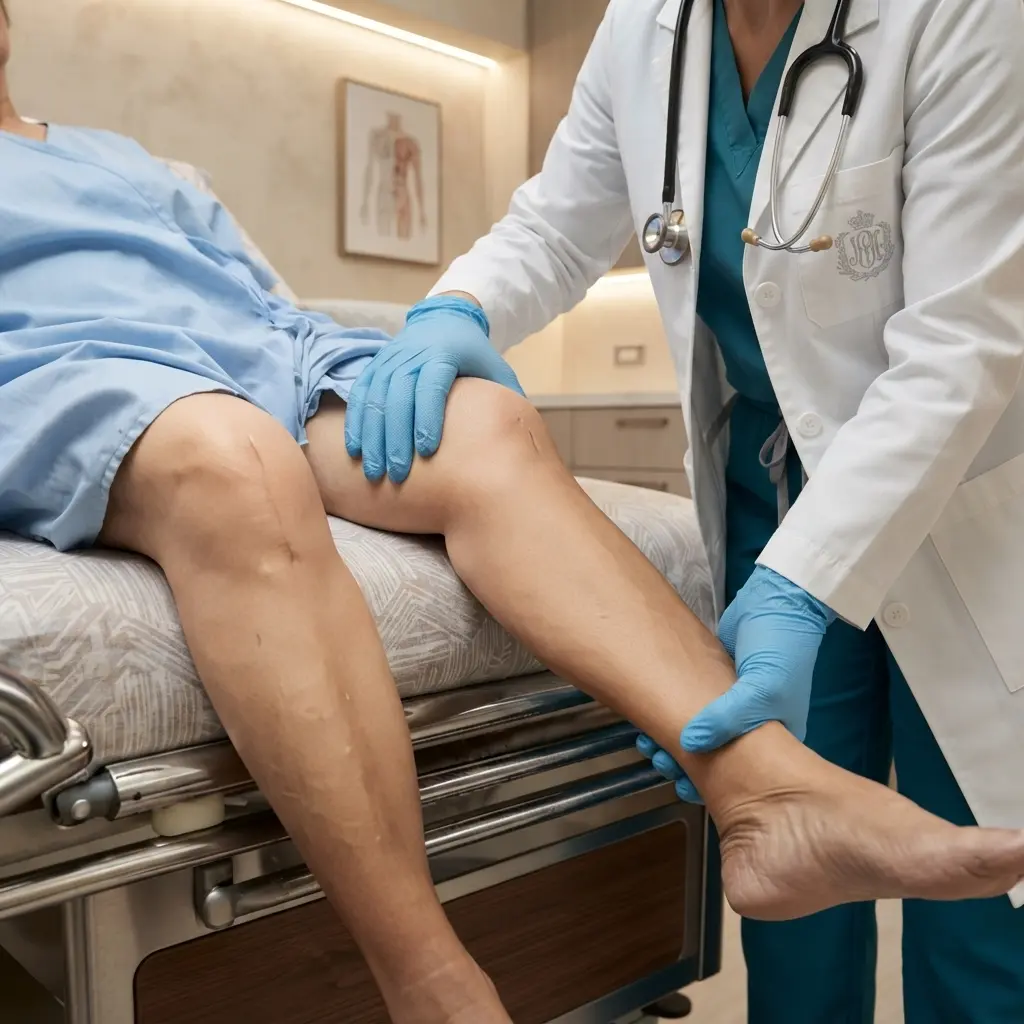
Knee Replacement is a specialized orthopedic surgical procedure used to replace damaged surfaces of the knee joint with artificial components. It may be recommended for patients with severe knee arthritis, advanced cartilage damage, significant deformity or persistent knee pain and mobility problems that have not improved sufficiently with non-surgical treatment.
Price: Price on Request
Why Price on Request?
The cost of knee replacement depends on the severity of joint damage, type of replacement, implant, surgical technique, diagnostic testing, anesthesia, hospital stay, rehabilitation and postoperative care. A personalized cost estimate is provided after specialist evaluation.
Complete Description
What Is Knee Replacement?
Knee replacement surgery, also called knee arthroplasty, involves removing damaged portions of the knee joint and replacing them with artificial components.
The procedure may help:
Reduce severe knee pain
Improve mobility
Improve knee function
Correct certain deformities
Improve ability to perform daily activities
Improve quality of life
The decision to undergo surgery depends on the patient's symptoms, degree of joint damage and response to other treatments.
Conditions That May Require Knee Replacement
Knee replacement may be considered for patients with:
Severe osteoarthritis
Rheumatoid arthritis
Advanced cartilage damage
Severe knee degeneration
Significant knee deformity
Certain traumatic joint damage
Previous knee injuries
Other advanced knee conditions
Symptoms of Severe Knee Damage
Patients may experience:
Persistent knee pain
Pain while walking
Knee stiffness
Swelling
Reduced range of motion
Difficulty climbing stairs
Difficulty standing
Difficulty performing daily activities
Pain during rest or sleep
Reduced mobility
Knee Arthritis Treatment
Knee arthritis can progressively damage the cartilage covering the joint surfaces.
Initial treatment may include:
Physical therapy
Exercise
Weight management
Activity modification
Medication
Bracing
Injections when appropriate
Other conservative treatments
When symptoms remain severe despite appropriate non-surgical care, knee replacement may be considered.
Types of Knee Replacement
Depending on the location and extent of joint damage, surgery may include:
Total knee replacement
Partial knee replacement
Revision knee replacement
The appropriate procedure depends on the patient's individual anatomy and condition.
Total Knee Replacement
Total knee replacement involves replacing damaged surfaces of the knee joint with artificial components.
It may be recommended when arthritis or other disease has extensively affected the knee.
The implant and surgical technique are selected according to the patient's anatomy and medical requirements.
Partial Knee Replacement
Partial knee replacement may be considered when damage is limited to one part of the knee.
This approach preserves healthy portions of the natural knee when appropriate.
Whether partial replacement is suitable depends on:
Location of damage
Disease severity
Ligament stability
Alignment
Overall knee condition
Pre-Surgical Knee Evaluation
Before knee replacement, orthopedic specialists may evaluate:
Knee pain
Range of motion
Joint stability
Muscle strength
Walking ability
Previous injuries
Previous treatments
Medical history
Current medications
This helps determine whether surgery is appropriate.
Diagnostic Imaging
Imaging helps evaluate the severity and location of knee damage.
Investigations may include:
X-rays
MRI
CT scan
Other specialized imaging
Imaging can help assess cartilage loss, bone changes, joint alignment and other structural abnormalities.
Knee Implant Selection
The orthopedic surgeon selects the appropriate implant based on:
Patient anatomy
Bone quality
Age
Activity level
Joint damage
Knee alignment
Surgical requirements
The goal is to provide an appropriate reconstruction of the knee joint.
Knee Replacement Surgery
During knee replacement, damaged portions of the knee are removed and replaced with artificial components.
The exact procedure depends on:
Type of knee replacement
Extent of joint damage
Patient anatomy
Previous surgeries
Overall medical condition
Minimally Invasive Knee Replacement
When appropriate, surgeons may use techniques designed to minimize tissue disruption.
Potential benefits may include:
Smaller incisions
Reduced soft-tissue disruption
Potentially faster early recovery
The appropriate surgical technique varies from patient to patient.
Revision Knee Replacement
Patients who have previously undergone knee replacement may sometimes require revision surgery.
Possible reasons include:
Implant loosening
Implant wear
Infection
Instability
Fracture
Persistent pain
Other implant-related complications
Revision knee replacement can be more complex than the original procedure.
Non-Surgical Treatment Before Knee Replacement
Knee replacement is not always the first treatment option.
Depending on the diagnosis, specialists may recommend:
Physical therapy
Exercise
Weight management
Activity modification
Medication
Bracing
Injections when appropriate
Other conservative treatments
Surgery may be considered when these treatments no longer provide sufficient relief or function.
Knee Rehabilitation
Rehabilitation plays an important role following knee replacement.
Physical therapy may focus on:
Improving knee movement
Building muscle strength
Improving balance
Restoring walking ability
Increasing independence
Returning to daily activities
The rehabilitation program is individualized according to recovery progress.
Recovery After Knee Replacement
Recovery varies depending on the patient's health, surgical technique and rehabilitation progress.
Postoperative care may include:
Pain management
Physical therapy
Walking exercises
Wound care
Blood-clot prevention
Mobility training
Gradual return to activities
Follow-up appointments
Potential Risks and Complications
Knee replacement is a major surgical procedure and may involve risks.
Potential complications include:
Infection
Blood clots
Bleeding
Implant loosening
Implant wear
Knee stiffness
Persistent pain
Fracture
Nerve or blood-vessel injury
Instability
Other procedure-specific complications
The surgical team discusses individual risks before surgery.
Long-Term Knee Replacement Care
Follow-up after knee replacement may help monitor:
Knee function
Pain
Range of motion
Implant stability
Bone condition
Signs of implant wear
Other possible complications
Follow-up recommendations vary according to the patient's circumstances.
Second Opinion for Knee Replacement
Patients who have been advised to undergo knee replacement may seek a specialist orthopedic second opinion.
The specialist may review:
X-rays
MRI or CT scans
Previous orthopedic reports
Previous treatments
Knee function
Proposed surgical plan
This can help patients understand whether knee replacement is appropriate and what alternatives may exist.
International Patients
International patients should provide previous orthopedic records whenever possible.
Useful documents may include:
X-rays
MRI scans
CT scans
Previous orthopedic consultation reports
Surgical reports
Physical therapy records
Medication list
Other relevant medical information
Benefits of Specialized Knee Replacement Care
Specialized knee replacement care may help:
Reduce severe knee pain
Improve mobility
Restore knee function
Treat advanced knee arthritis
Correct selected knee deformities
Improve daily physical function
Provide individualized implant selection
Offer revision surgery when required
Support structured rehabilitation
Improve quality of life
Why Choose Mayo Clinic for Knee Replacement?
Mayo Clinic provides specialized orthopedic evaluation and surgical care for patients with advanced knee disorders and complex joint conditions.
Depending on individual needs, care may involve orthopedic surgeons, radiologists, rehabilitation specialists, physical therapists and other healthcare professionals.
Cost & Price on Request
Price: Price on Request
The total cost depends on the patient's condition and treatment requirements.
Potential costs may include:
Orthopedic consultation
Diagnostic imaging
Preoperative testing
Knee replacement surgery
Implant
Anesthesia
Hospital stay
Medications
Rehabilitation
Follow-up care
A personalized cost estimate should be requested after specialist evaluation.
Frequently Asked Questions
1. Who may need knee replacement?
Knee replacement may be considered for patients with severe arthritis, advanced cartilage damage, significant knee deformity or persistent pain and mobility problems that have not improved adequately with other treatments.
2. Is knee replacement always necessary for arthritis?
No. Many patients can initially be managed with physical therapy, exercise, medication, weight management, activity modification and other non-surgical treatments.
3. What is the difference between total and partial knee replacement?
Total knee replacement replaces the damaged surfaces of the knee more extensively, while partial knee replacement treats damage limited to a specific portion of the knee.
4. Can a previously replaced knee be operated on again?
Yes. Revision knee replacement may be performed when an existing implant develops problems such as loosening, wear, infection or instability.
5. How much does knee replacement cost?
Price is available on request. The final cost depends on the surgery, implant, anesthesia, hospital services, rehabilitation and follow-up care required.
Product Details
Product Name: Knee Replacement
Hospital: Mayo Clinic – Rochester
Brand: Mayo Clinic
Country: United States
Specialty: Orthopedics
Service Type: Knee Replacement
Dashboard Price: 0
Customer-Facing Price: Price on Request
International Patients: Available
Location: Rochester, Minnesota, USA
Related products



Spine Surgery at Mayo Clinic




Frequently Bought Together
No frequently bought products found!
Products from this Seller
View All











Chemotherapy at Mayo Clinic

Immunotherapy at Mayo Clinic

Medical Tourism





Share with Friends
Trading is more effective when you share products with friends!Share you link
Share to