











Bronchoscopy at Toronto General Hospital
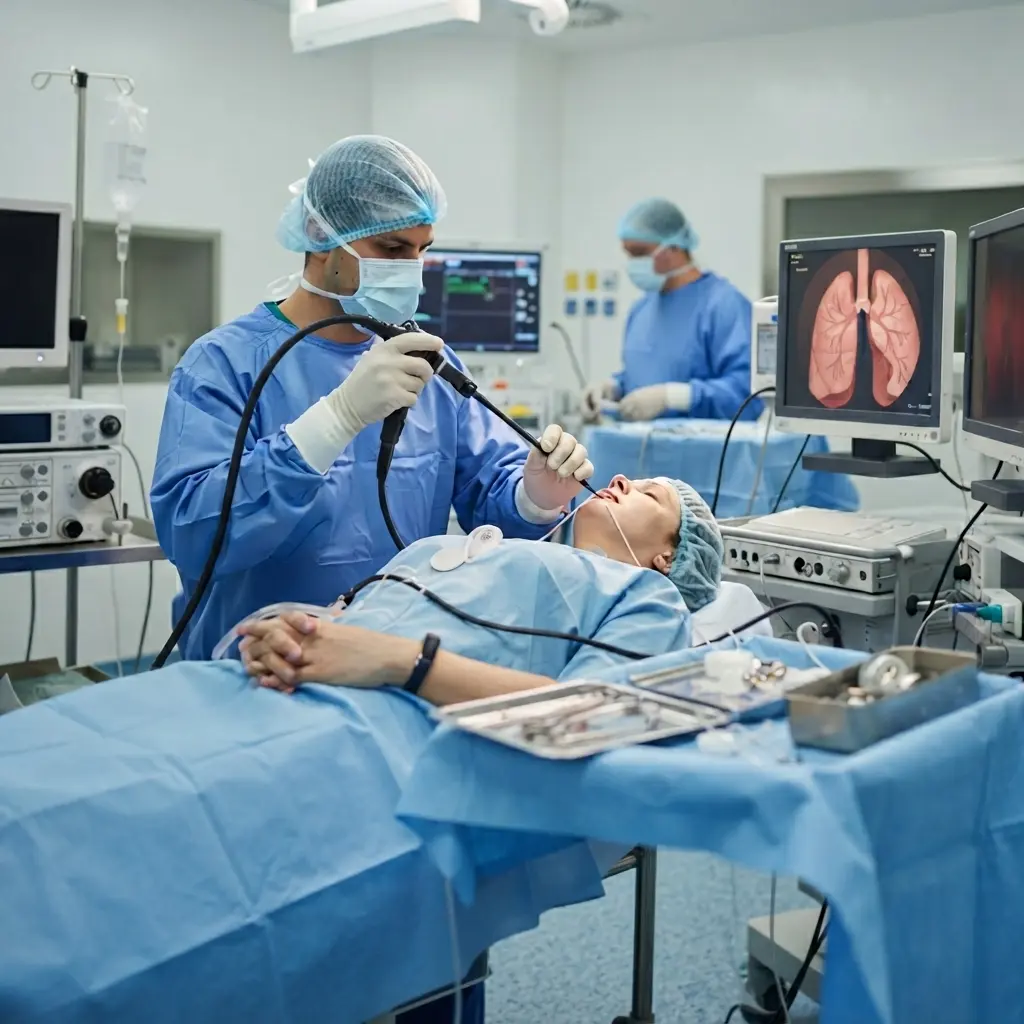
Bronchoscopy is a specialized diagnostic procedure used to examine the airways and lungs using a thin bronchoscope. It may help investigate persistent respiratory symptoms, abnormal chest imaging, lung masses, infections and other complex pulmonary conditions. Tissue or fluid samples may also be collected when clinically indicated.
Price
Price on Request
Why Price on Request?
The cost of bronchoscopy varies according to the type of procedure, diagnostic requirements, sedation or anesthesia, biopsy or sample collection, laboratory and pathology testing, additional imaging and post-procedure monitoring. A personalized cost estimate can be provided after specialist assessment.
Complete Description
What Is Bronchoscopy?
Bronchoscopy is a medical procedure that allows specialists to examine the inside of the airways and collect diagnostic samples when necessary.
A bronchoscope is a thin instrument that can be used to examine:
Trachea
Bronchi
Major airways
Selected areas of the lungs
The procedure may be recommended for diagnostic or therapeutic purposes depending on the patient's condition.
Who May Need Bronchoscopy?
Bronchoscopy may be considered for patients with:
Persistent cough
Unexplained respiratory symptoms
Abnormal chest imaging
Lung masses
Lung nodules
Suspected lung cancer
Certain respiratory infections
Airway abnormalities
Unexplained bleeding from the respiratory tract
Other complex pulmonary conditions
The need for bronchoscopy depends on specialist assessment.
Bronchoscopy for Lung Disease Evaluation
Bronchoscopy can help specialists investigate complex lung conditions when other tests do not provide sufficient information.
The procedure may help assess:
Airway abnormalities
Lung lesions
Persistent inflammation
Certain infections
Abnormal imaging findings
Other respiratory conditions
Bronchoscopy for Lung Cancer Diagnosis
Bronchoscopy may be used as part of the diagnostic evaluation of selected lung cancers.
Depending on the location of the abnormality, specialists may obtain:
Tissue samples
Cell samples
Fluid samples
Other diagnostic specimens
These samples may be sent for laboratory and pathology analysis.
Bronchoscopy for Lung Masses and Nodules
Patients with suspicious lung masses or nodules may require further investigation.
Bronchoscopy can sometimes provide access to lesions within or near the airways and may allow specialists to collect tissue or other samples.
The appropriate diagnostic approach depends on the size, location and characteristics of the abnormality.
Bronchoalveolar Lavage
In selected cases, bronchoscopy may include bronchoalveolar lavage, where a small amount of sterile fluid is introduced and then collected for laboratory analysis.
This may help investigate certain:
Infections
Inflammatory lung conditions
Pulmonary disorders
Other complex respiratory conditions
Bronchial Biopsy
A biopsy may be performed during bronchoscopy when tissue is required for diagnosis.
Pathology analysis may help identify:
Cancer
Inflammation
Infection
Other abnormal tissue changes
The need for biopsy depends on the clinical findings.
Airway Examination
Bronchoscopy allows specialists to directly examine the airways for abnormalities such as:
Narrowing
Blockage
Abnormal tissue
Inflammation
Bleeding
Other structural changes
The findings may help guide further treatment.
Diagnostic Sample Collection
During bronchoscopy, specialists may collect samples for:
Pathology
Cytology
Microbiology
Other laboratory investigations
The type of sample collected depends on the suspected condition.
Advanced Bronchoscopic Assessment
For selected patients, specialized bronchoscopic techniques may be considered to improve evaluation of certain lung abnormalities.
The appropriate technique depends on:
Location of the abnormality
Size of the lesion
Imaging findings
Suspected diagnosis
Overall clinical condition
Pre-Procedure Assessment
Before bronchoscopy, patients may undergo:
Medical history review
Respiratory assessment
Physical examination
Medication review
Blood testing when required
Imaging review
Anesthesia or sedation assessment
Patients may receive specific preparation instructions before the procedure.
Sedation and Anesthesia
Depending on the type of bronchoscopy and clinical circumstances, sedation or anesthesia may be used to improve comfort and facilitate the procedure.
The appropriate approach is determined by the medical team.
Post-Bronchoscopy Care
Following the procedure, patients may require observation for a period of time.
Post-procedure care may include:
Respiratory monitoring
Recovery from sedation
Assessment for complications
Review of preliminary findings
Follow-up planning
Pathology or laboratory result review when samples were collected
Specific recovery instructions depend on the procedure performed.
Bronchoscopy for Infection Investigation
Bronchoscopy may help investigate selected complex or persistent respiratory infections.
Samples collected during the procedure may be analyzed for microorganisms when clinically appropriate.
This can assist specialists in determining the cause of certain difficult-to-diagnose pulmonary infections.
Bronchoscopy Second Opinion
Patients may seek a bronchoscopy or lung disease second opinion regarding:
Abnormal chest imaging
Lung nodules
Lung masses
Unexplained respiratory symptoms
Suspected lung cancer
Previous biopsy recommendations
Complex respiratory conditions
Existing imaging, pathology and medical records can be reviewed before determining whether bronchoscopy is appropriate.
International Patient Bronchoscopy
International patients seeking bronchoscopy assessment in Canada should provide relevant medical documentation whenever available.
Useful records may include:
CT scans
Chest X-rays
PET scans
Previous bronchoscopy reports
Biopsy reports
Pathology results
Laboratory investigations
Respiratory specialist reports
Medication list
Previous treatment records
Complete records can help specialists determine the appropriate diagnostic approach.
Benefits of Specialized Bronchoscopy
Bronchoscopy may help selected patients:
Directly examine the airways
Investigate abnormal chest imaging
Evaluate lung masses and nodules
Obtain tissue samples
Collect respiratory specimens
Investigate selected infections
Support lung cancer diagnosis
Guide further treatment planning
Why Choose Toronto General Hospital for Bronchoscopy?
Toronto General Hospital (TGH) is part of University Health Network (UHN) and provides specialized complex medical care.
Patients requiring bronchoscopic evaluation may be assessed according to their respiratory condition, diagnostic requirements and clinical needs through the relevant UHN programs and specialists.
The availability and type of bronchoscopy depend on specialist assessment and clinical eligibility.
Cost & Price on Request
Price: Price on Request
The total cost depends on the type of bronchoscopy and additional diagnostic services required.
Potential costs may include:
Respiratory specialist consultation
Bronchoscopy procedure
Sedation or anesthesia
Biopsy
Laboratory testing
Pathology
Microbiology testing
Diagnostic imaging
Post-procedure monitoring
Follow-up consultation
A personalized cost estimate can be requested following specialist assessment.
Frequently Asked Questions
1. Why is bronchoscopy performed?
Bronchoscopy may be used to investigate abnormal chest imaging, persistent respiratory symptoms, lung masses, infections, airway abnormalities and selected suspected lung cancers.
2. Can a biopsy be taken during bronchoscopy?
Yes. When clinically appropriate, tissue or cell samples may be collected during the procedure for pathology and other laboratory testing.
3. Is bronchoscopy used to diagnose lung cancer?
Bronchoscopy can be part of the diagnostic evaluation for selected lung cancers, particularly when an abnormality can be accessed through the airways.
4. How long does recovery from bronchoscopy take?
Recovery varies according to the procedure, sedation or anesthesia used and the patient's individual condition. The medical team provides specific post-procedure instructions.
5. Can international patients receive bronchoscopy in Canada?
International patients may request specialist assessment subject to applicable hospital processes, medical requirements, eligibility and program availability.
Product Details
Product Name: Bronchoscopy
Hospital: Toronto General Hospital
Brand: Toronto General Hospital
Country: Canada
Specialty: Thoracic Surgery & Lung Care
Service Type: Bronchoscopy
Customer-Facing Price: Price on Request
International Patients: Subject to applicable eligibility and program requirements
Location: Toronto, Ontario, Canada
Related products
Frequently Bought Together
No frequently bought products found!
Products from this Seller
View All

Chemotherapy at Mayo Clinic
Immunotherapy at Mayo Clinic
Medical Tourism





Share with Friends
Trading is more effective when you share products with friends!Share you link
Share to