









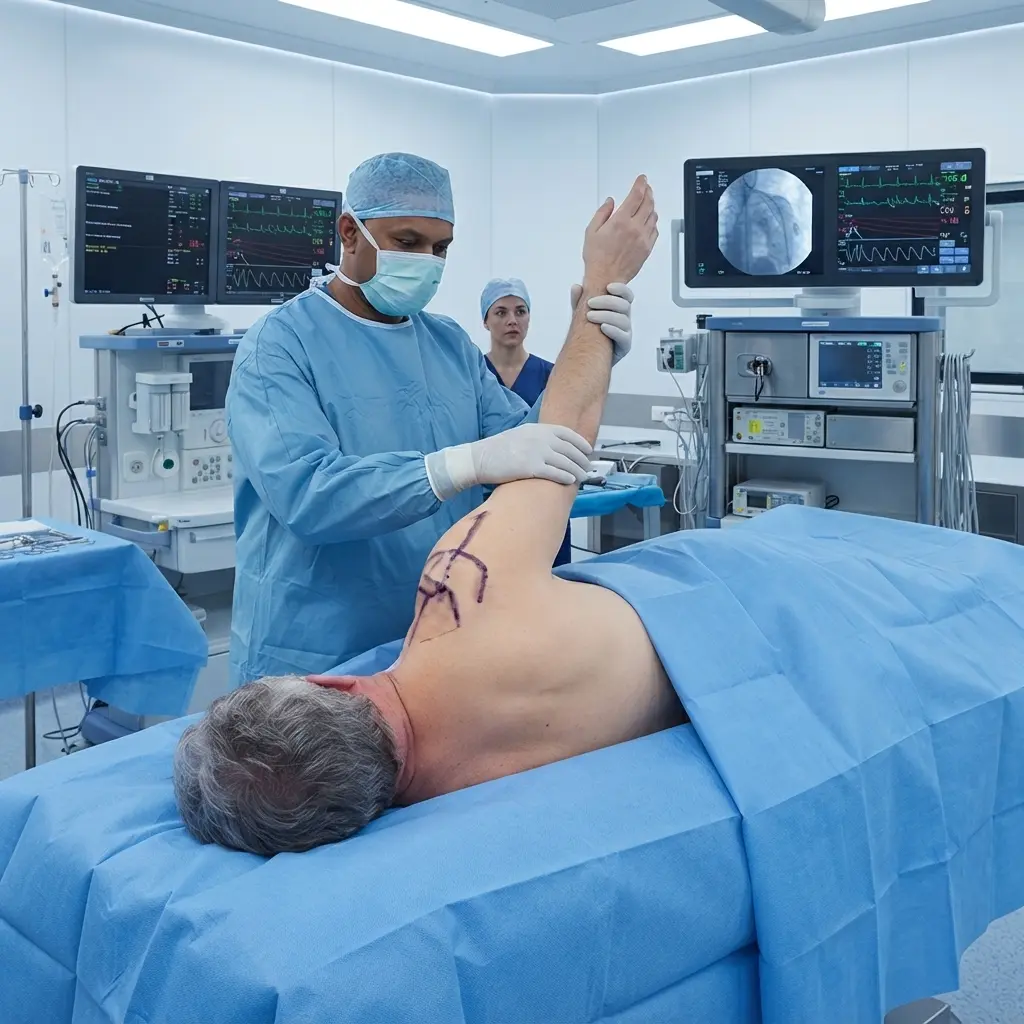
Shoulder Surgery at Cleveland Clinic
Shoulder Surgery at Cleveland Clinic provides specialized evaluation and surgical treatment for conditions affecting the shoulder joint, rotator cuff, tendons, ligaments, cartilage and surrounding structures. Orthopedic specialists assess the cause and severity of shoulder problems and develop an individualized treatment plan that may include arthroscopic surgery, tendon or ligament repair, shoulder replacement and postoperative rehabilitation.
Price
Price on Request
Why Price on Request?
The cost of shoulder surgery depends on the type and severity of the shoulder condition, surgical procedure, diagnostic imaging, anesthesia, hospitalization, implants when required, rehabilitation and follow-up care. A personalized estimate is provided after evaluation.
Complete Description
What Is Shoulder Surgery?
Shoulder Surgery includes a range of surgical procedures used to treat injuries, degenerative conditions and structural problems affecting the shoulder.
Treatment may involve:
Shoulder arthroscopy
Rotator cuff repair
Labral repair
Tendon repair
Ligament procedures
Shoulder stabilization
Shoulder replacement
Fracture surgery
Who May Need Shoulder Surgery?
Shoulder surgery may be considered for patients with:
Rotator cuff tears
Shoulder instability
Labral injuries
Severe arthritis
Tendon injuries
Shoulder impingement
Certain fractures
Joint degeneration
Recurrent shoulder dislocation
Conditions that do not improve with non-surgical treatment
Shoulder Consultation
An orthopedic consultation may include:
Detailed medical history
Physical examination
Assessment of shoulder movement
Strength testing
Stability evaluation
Pain assessment
Review of previous treatment
Review of diagnostic imaging
Shoulder Evaluation
Specialists may evaluate:
Shoulder pain
Range of motion
Muscle strength
Joint stability
Shoulder alignment
Functional limitations
Previous injuries
Overall health
Rotator Cuff Surgery
Rotator cuff surgery may be considered for selected patients with significant tendon tears or persistent symptoms.
Treatment may involve repairing damaged tendons to improve shoulder function and stability.
Shoulder Arthroscopy
Shoulder arthroscopy is a minimally invasive procedure that uses a small camera and specialized instruments to evaluate and treat problems inside the shoulder joint.
It may be used for selected:
Rotator cuff injuries
Labral injuries
Impingement
Cartilage problems
Shoulder instability
Shoulder Labral Surgery
The labrum helps stabilize the shoulder joint.
Selected labral injuries may require surgical repair when symptoms persist or significant instability is present.
Shoulder Instability Surgery
Patients with recurrent shoulder dislocation or instability may be evaluated for surgical stabilization.
Treatment aims to improve:
Joint stability
Shoulder function
Activity tolerance
Shoulder Replacement
Patients with severe shoulder joint damage may be evaluated for shoulder replacement.
Replacement options may include:
Total shoulder replacement
Reverse shoulder replacement
Other specialized procedures when appropriate
Reverse Shoulder Replacement
Reverse shoulder replacement changes the mechanics of the shoulder joint and may be considered for selected patients with specific combinations of arthritis and rotator cuff problems.
Shoulder Fracture Surgery
Certain complex shoulder fractures may require surgical treatment.
Treatment decisions may consider:
Fracture location
Bone displacement
Joint involvement
Bone quality
Overall health
Shoulder Arthritis Treatment
Patients with shoulder arthritis may initially receive:
Medication
Physical therapy
Activity modification
Injections when appropriate
Other non-surgical treatments
Surgery may be considered when symptoms remain severe.
Minimally Invasive Shoulder Surgery
Selected procedures can be performed using minimally invasive techniques.
Potential benefits may include:
Smaller incisions
Reduced tissue disruption
Less postoperative discomfort
Faster recovery in selected cases
The appropriate technique depends on the individual condition.
Shoulder Surgery Rehabilitation
Rehabilitation is an important part of recovery.
A rehabilitation program may include:
Range-of-motion exercises
Strengthening exercises
Flexibility training
Shoulder stabilization exercises
Functional movement training
Physical Therapy After Shoulder Surgery
Physical therapy may help patients:
Restore shoulder movement
Improve strength
Improve stability
Reduce functional limitations
Return to daily activities
The program is individualized according to the procedure and recovery progress.
Shoulder Surgery Recovery
Recovery varies depending on:
Type of surgery
Severity of injury
Patient's overall health
Age
Rehabilitation progress
Preoperative shoulder function
Shoulder Surgery Complications
As with any surgical procedure, potential complications may include:
Infection
Bleeding
Nerve or blood vessel injury
Stiffness
Persistent pain
Joint instability
Implant-related complications
Patients are monitored before and after surgery to help manage potential risks.
Shoulder Surgery Second Opinion
Patients who have been advised to undergo shoulder surgery may seek a shoulder surgery second opinion.
Specialists may review:
X-rays
MRI scans
CT scans
Medical records
Previous treatment
Surgical recommendations
International Patients
International patients should provide relevant medical records whenever possible.
Useful documents may include:
Shoulder X-rays
MRI scans
CT scans
Orthopedic reports
Previous surgical reports
Physical therapy records
Laboratory results
Current medication list
Benefits of Specialized Shoulder Surgery Care
Specialized shoulder surgery may help:
Treat selected rotator cuff tears
Address shoulder instability
Repair selected labral injuries
Treat severe shoulder arthritis
Manage complex fractures
Restore shoulder function
Improve mobility
Provide individualized rehabilitation
Provide surgical second opinions
Why Choose Cleveland Clinic for Shoulder Surgery?
Cleveland Clinic provides multidisciplinary orthopedic and sports medicine care involving orthopedic surgeons, rehabilitation specialists, physical therapists, radiologists and other healthcare professionals.
Patients can receive comprehensive evaluation, surgical planning and postoperative rehabilitation based on their individual shoulder condition.
Cost & Price on Request
Price: Price on Request
The total cost depends on the shoulder condition and surgical procedure required.
Potential costs may include:
Orthopedic consultation
Diagnostic imaging
Preoperative testing
Shoulder surgery
Anesthesia
Hospital or surgical facility costs
Implants when required
Medications
Physical therapy
Rehabilitation
Follow-up consultations
A personalized cost estimate should be requested according to the patient's individual treatment plan.
Frequently Asked Questions
1. What shoulder conditions may require surgery?
Surgery may be considered for selected rotator cuff tears, shoulder instability, labral injuries, severe arthritis, fractures and other structural shoulder problems.
2. Is shoulder surgery always necessary?
No. Many shoulder conditions can initially be treated with physical therapy, medication, activity modification and other non-surgical approaches.
3. What is shoulder arthroscopy?
Shoulder arthroscopy is a minimally invasive procedure using a small camera and specialized instruments to diagnose and treat selected shoulder conditions.
4. Is physical therapy needed after shoulder surgery?
Rehabilitation is commonly recommended to help restore movement, strength, stability and shoulder function.
5. How much does shoulder surgery cost?
Price is available on request. The final cost depends on the procedure, anesthesia, hospitalization, implants when required, rehabilitation and follow-up care.
Product Details
Product Name: Shoulder Surgery at Cleveland Clinic
Hospital: Cleveland Clinic
Brand: Cleveland Clinic
Country: United States
Specialty: Orthopaedics & Rheumatology
Service Type: Shoulder Surgery
Customer-Facing Price: Price on Request
International Patients: Available
Location: Cleveland, Ohio, USA
Related products


Frequently Bought Together
No frequently bought products found!
Products from this Seller
View All





Chemotherapy at Mayo Clinic

Immunotherapy at Mayo Clinic
Medical Tourism





Share with Friends
Trading is more effective when you share products with friends!Share you link
Share to