














Crohn's Disease Treatment at Massachusetts General Hospital
Crohn's Disease Treatment at Massachusetts General Hospital provides specialized, long-term care for Crohn's disease and its gastrointestinal complications. Treatment may include comprehensive evaluation, medication management, advanced therapies, nutritional support, endoscopic monitoring and surgical care when clinically appropriate.
Price
Why Price on Request?
The cost depends on the severity and location of Crohn's disease, diagnostic testing, medications, advanced therapies, endoscopic procedures, hospitalization and surgery required. A personalized estimate can be provided according to the patient's treatment plan.
Complete Description
What Is Crohn's Disease?
Crohn's disease is a chronic inflammatory bowel disease that can cause inflammation anywhere along the gastrointestinal tract, most commonly involving the small intestine and colon.
Who May Need Crohn's Disease Treatment?
Patients may require specialist care for symptoms such as:
Persistent diarrhea
Abdominal pain
Rectal bleeding
Weight loss
Fatigue
Reduced appetite
Fever
Recurrent digestive symptoms
Crohn's Disease Consultation
Specialists may review:
Symptoms
Disease history
Previous flare-ups
Medication history
Colonoscopy findings
Imaging
Blood tests
Stool tests
Pathology results
Crohn's Disease Diagnosis
Evaluation may include:
Blood testing
Stool testing
Colonoscopy
Endoscopy
CT scans
MRI
Biopsy
Other gastrointestinal investigations
Disease Activity Assessment
Specialists may assess:
Severity of inflammation
Location of disease
Intestinal damage
Treatment response
Presence of complications
Nutritional status
Medication Management
Treatment may involve medications designed to:
Reduce intestinal inflammation
Control symptoms
Achieve remission
Maintain remission
Reduce the risk of complications
The treatment plan is individualized according to disease characteristics and previous treatment response.
Advanced Crohn's Disease Therapies
Patients with moderate-to-severe or difficult-to-control Crohn's disease may be evaluated for advanced medical therapies.
Selection may depend on:
Disease severity
Previous medications
Treatment response
Complications
Patient-specific factors
Crohn's Disease Monitoring
Ongoing monitoring may include:
Blood tests
Stool markers
Colonoscopy
MRI or other imaging
Symptom assessment
Medication response
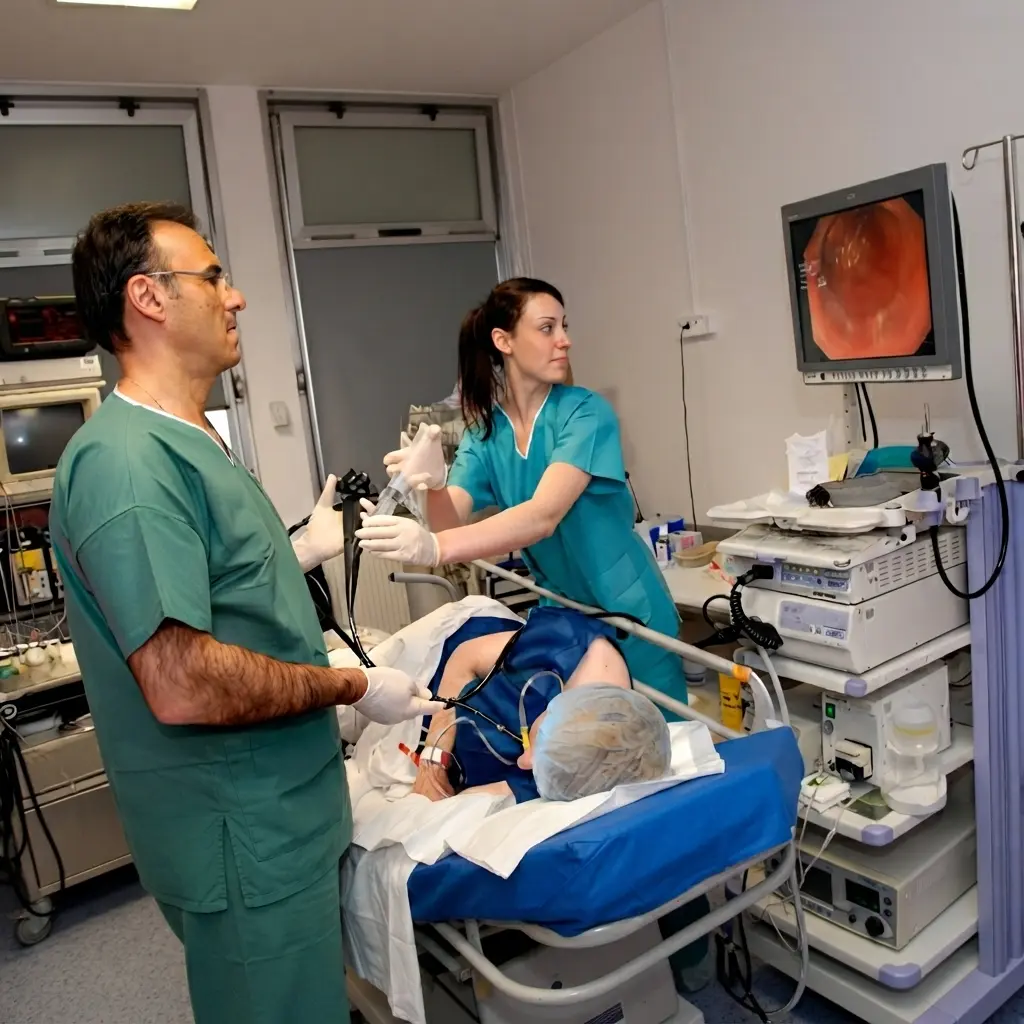
Endoscopic Evaluation
Endoscopy and colonoscopy may be used to assess:
Inflammation
Ulceration
Disease activity
Healing
Intestinal complications
Biopsies may be collected when appropriate.
Nutrition Support
Patients with Crohn's disease may experience nutritional problems due to inflammation, reduced intake or intestinal complications.
Specialized care may include nutritional assessment and dietary support.
Crohn's Disease Flare Management
When symptoms worsen, specialists may evaluate:
Disease activity
Medication effectiveness
Possible infection
New complications
Need for treatment adjustment
Crohn's Disease Complications
Specialized treatment may address complications including:
Intestinal strictures
Fistulas
Abscesses
Obstruction
Bleeding
Nutritional deficiencies
Crohn's Disease Surgery
Surgery may be considered for selected patients with:
Significant intestinal narrowing
Obstruction
Fistulas
Abscesses
Severe complications
Disease that remains uncontrolled despite appropriate medical treatment
Surgical decisions are individualized.
Multidisciplinary Crohn's Disease Care
Complex patients may receive coordinated care involving:
Gastroenterologists
IBD specialists
Colorectal surgeons
Radiologists
Pathologists
Nutrition specialists
Crohn's Disease Second Opinion
Patients may seek specialist review of:
Crohn's diagnosis
Colonoscopy findings
MRI/CT results
Medication plans
Advanced therapy options
Surgery recommendations
Persistent or recurring symptoms
International Patients
International patients should provide:
Colonoscopy reports
Biopsy/pathology results
CT/MRI scans
Blood and stool test results
Medication history
Previous treatment records
Surgical reports
Benefits of Specialized Crohn's Disease Care
Specialized services may provide:
Comprehensive disease evaluation
Individualized medical treatment
Advanced therapies
Endoscopic monitoring
Nutritional support
Complication management
Surgical consultation
Long-term follow-up
Why Choose Massachusetts General Hospital for Crohn's Disease Treatment?
Massachusetts General Hospital provides multidisciplinary care for Crohn's disease and complex inflammatory bowel conditions, with access to gastroenterology, advanced endoscopy, colorectal surgery, imaging, pathology and nutritional services.
Cost & Price on Request
Price: Price on Request
Potential costs may include:
Gastroenterology consultation
Laboratory testing
Stool testing
Colonoscopy/endoscopy
MRI/CT imaging
Pathology
Prescription medications
Advanced therapies
Surgery when required
Hospitalization
Follow-up care
A personalized cost estimate should be requested according to the patient's diagnosis and treatment plan.
Frequently Asked Questions
1. Can Crohn's disease be controlled with treatment?
Treatment can help control inflammation, reduce symptoms and maintain remission, although the appropriate approach varies between patients.
2. Does Crohn's disease always require surgery?
No. Many patients are managed medically. Surgery is considered when significant complications develop or medical treatment is insufficient.
3. Can Crohn's disease affect the entire digestive tract?
Yes. Crohn's disease can affect different areas of the gastrointestinal tract, from the mouth to the anus, although certain areas are affected more commonly.
4. Is colonoscopy used to monitor Crohn's disease?
Yes. Colonoscopy can be used in appropriate patients to evaluate intestinal inflammation, healing and disease activity.
5. How much does Crohn's disease treatment cost?
Price is available on request. Costs depend on consultations, testing, medication, advanced therapies, procedures, hospitalization and surgery when required.
Product Details
Product Name: Crohn's Disease Treatment at Massachusetts General Hospital
Hospital: Massachusetts General Hospital
Brand: Massachusetts General Hospital
Country: United States
Specialty: Gastroenterology & Hepatology
Service Type: Crohn's Disease Treatment
Customer-Facing Price: Price on Request
International Patients: Available
Location: Boston, Massachusetts, USA
Related products








Frequently Bought Together
No frequently bought products found!
Products from this Seller
View All













Chemotherapy at Mayo Clinic

Immunotherapy at Mayo Clinic




Medical Tourism





Share with Friends
Trading is more effective when you share products with friends!Share you link
Share to